When I started my career as a transmission line engineer, one question constantly came to mind:
How do we determine the optimum combination of conductor, tension, tower, and foundation?
The more transmission lines I designed, the less obvious the answer became.
At one stage of my career, I joined a research team tasked with developing an entirely new family of 220 kV transmission towers for a Russian utility. Like many engineering teams before us, we initially searched for a simple methodology - a formula that could determine the optimum tower-top geometry, structural strength, base dimensions, height, and weight.
After numerous attempts, my colleagues and I reached a different conclusion: there is no universal formula.
The optimum solution can only be identified through a comprehensive comparison of thousands of possible design scenarios. Tower weight is only one part of the equation. Foundation loads, transportation costs, availability of construction materials, fabrication constraints, geological conditions, access limitations caused by swamps or mountainous terrain, and many other factors all influence the final decision.
As a result, we proposed more than 1,000 tower configurations, each intended for different operating and environmental conditions. This experience reinforced an important lesson: no standard tower family can provide the most economical solution for every project.
The Challenge of Conceptual Design
While detailed design can rely on sophisticated analysis, the most influential decisions are often made much earlier.
Before any structural calculations begin, engineers must select:
- Conductor type
- Mechanical tension
- Tower height
- Tower-top geometry
- Wind/Weight span
- Deviation angles
- Termination loads
These parameters largely determine the overall project cost, yet they must be estimated with limited information during the conceptual design stage.
Modern engineering software is exceptionally powerful. Finite Element Analysis, structural optimization, and parametric modelling allow us to optimize individual tower designs with remarkable precision.
Over recent decades, many excellent papers have been published on transmission tower optimization. Most focus on improving the efficiency of individual structures after the main design parameters have already been selected.
We Still Lack a Practical Conceptual Design Tool
What is still missing is a practical, simplified methodology that helps engineers make better conceptual design decisions.
Experienced transmission line engineers often rely on intuition developed through years of practice. Their judgement is frequently excellent, but it is difficult to explain, reproduce, or justify through a transparent engineering methodology.
Entering a New Era
Today we are entering a new era of engineering.
Modern computational resources allow us to evaluate thousands of complete design scenarios rather than optimizing a single tower in isolation. Instead of asking, "How can I make this tower lighter?" we should be asking, "Which conductor / tower / foundation combination delivers the lowest lifecycle cost?"
The remaining challenge is data.
Meaningful optimization requires reliable information such as:
- Regional concrete and steel prices
- Transportation distances
- Site accessibility
- Construction schedules
- Equipment availability
- Labour costs
- Future maintenance expenditure
- Market conditions during periods of high construction demand
No single organization possesses all of this information. Achieving truly optimized transmission line design requires close collaboration between utilities, consultants, manufacturers, contractors, and suppliers.
Even then, absolute optimization will never be possible.
But we can certainly move much closer.
Looking Back to Move Forward
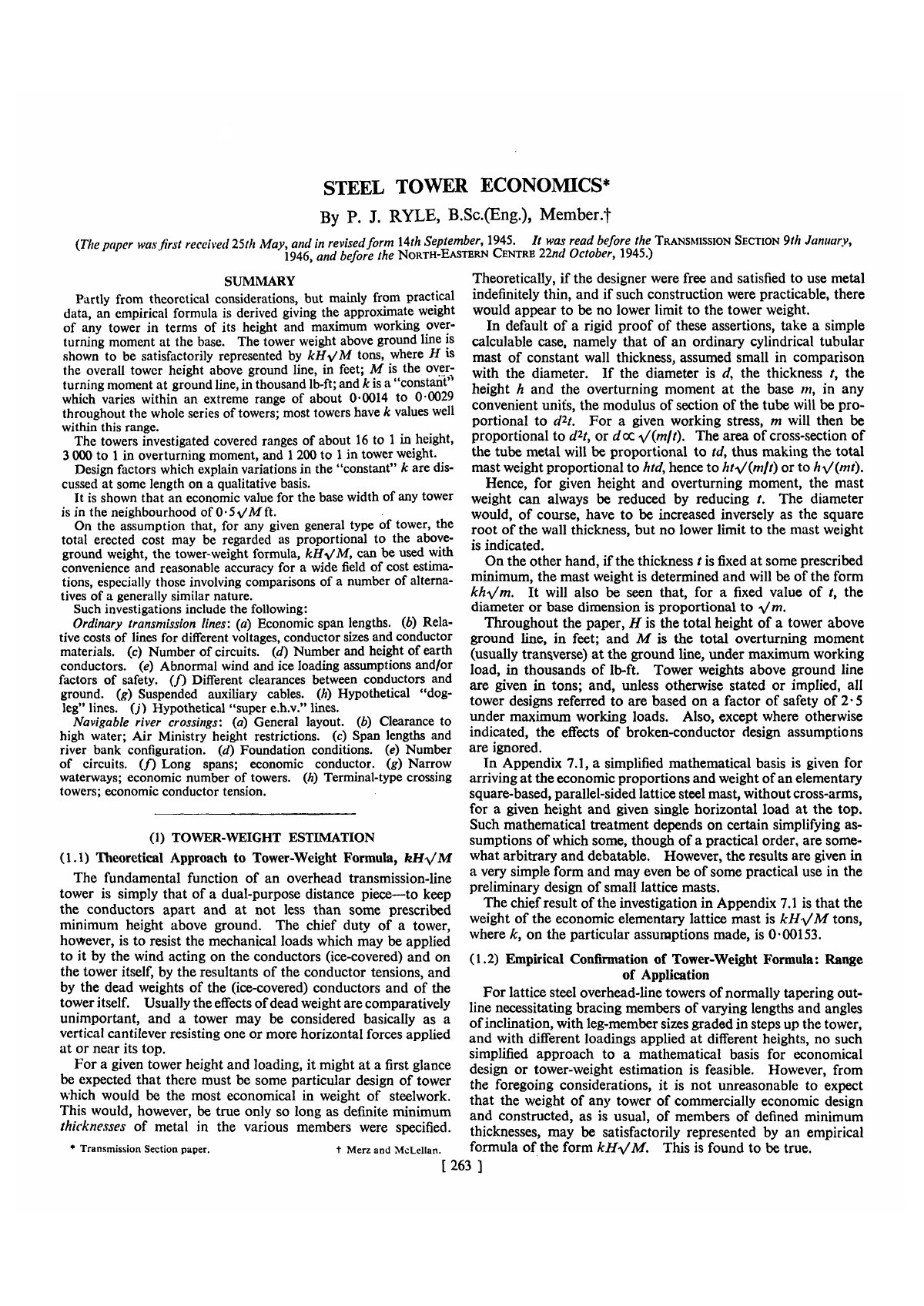
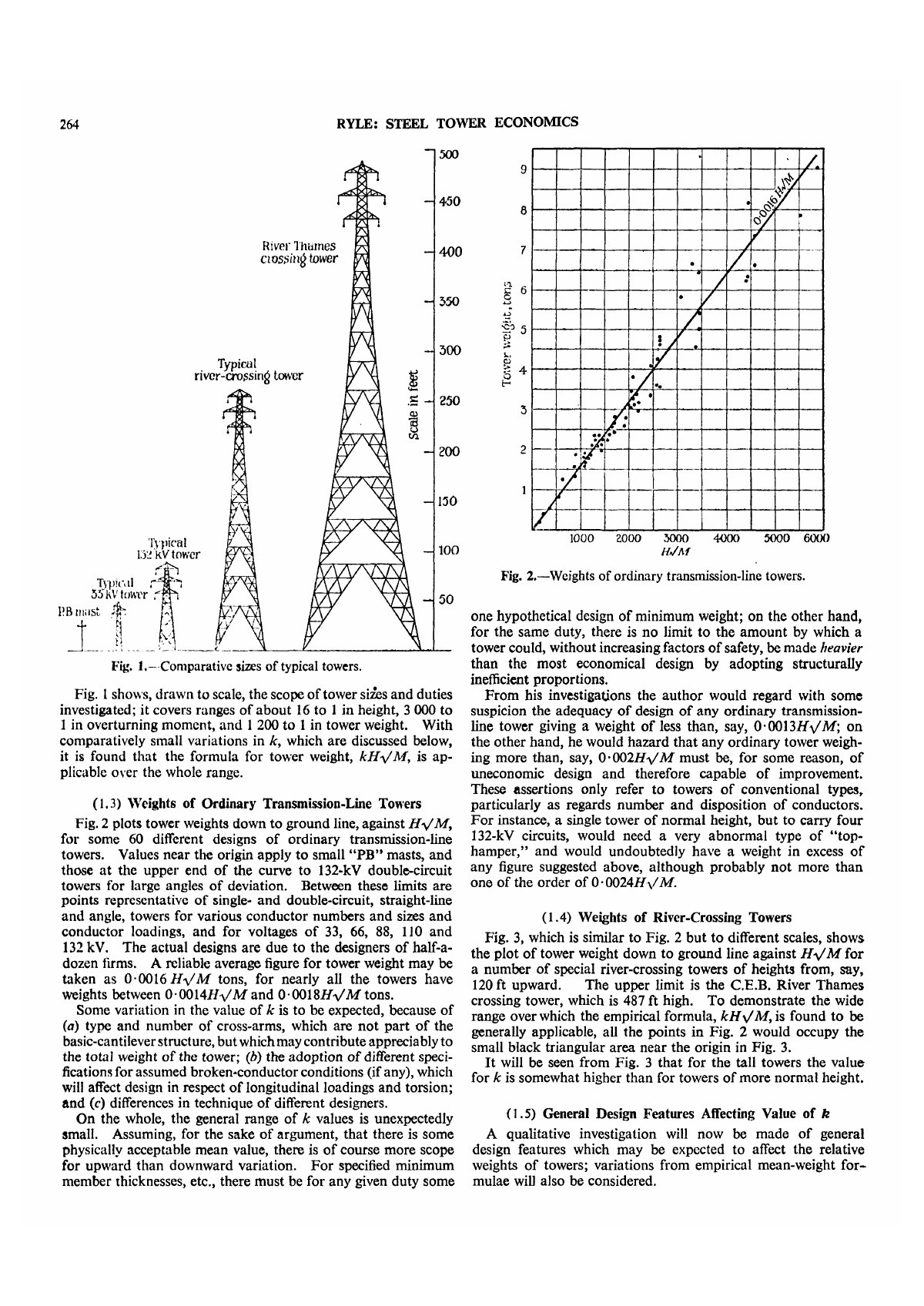
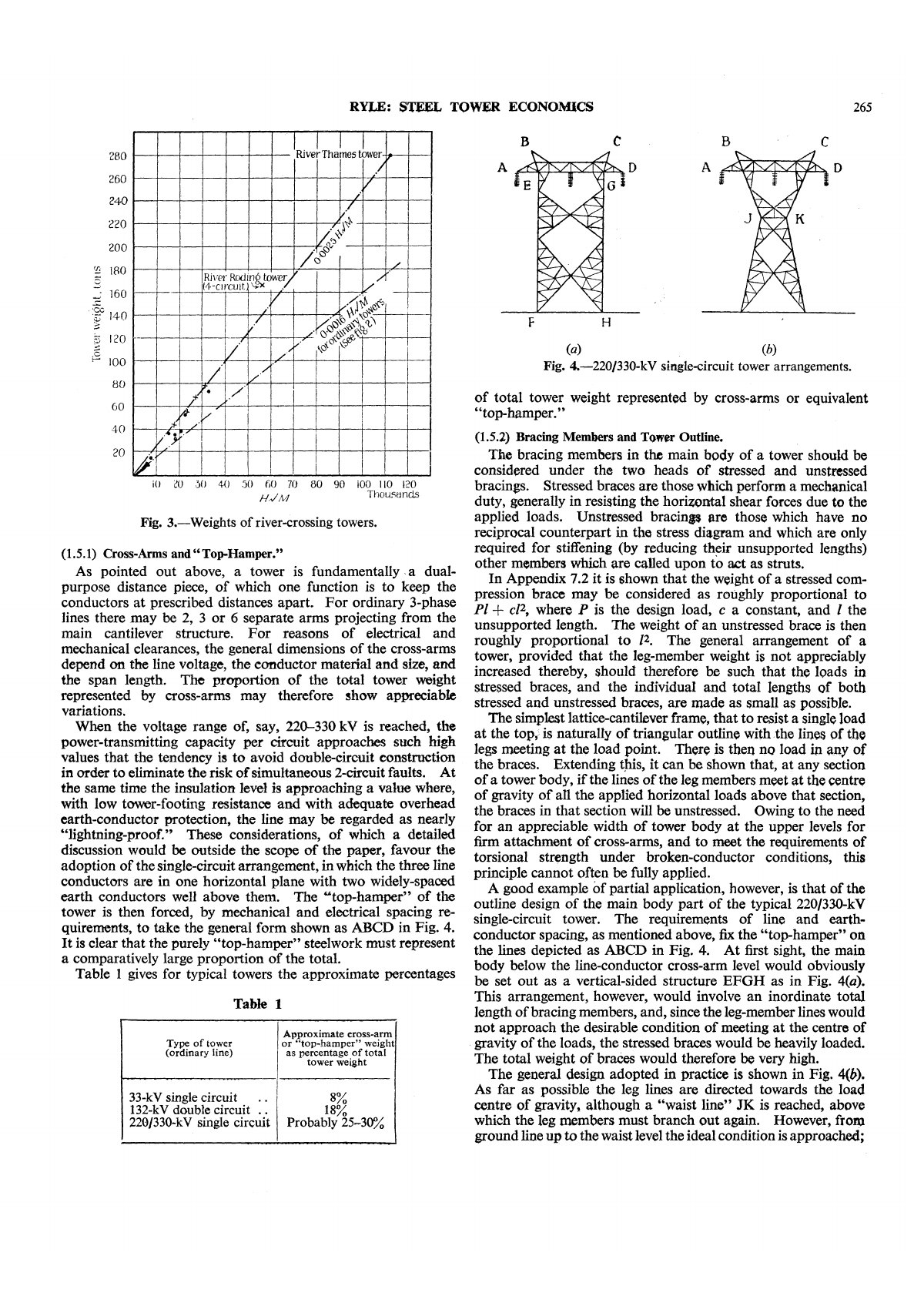
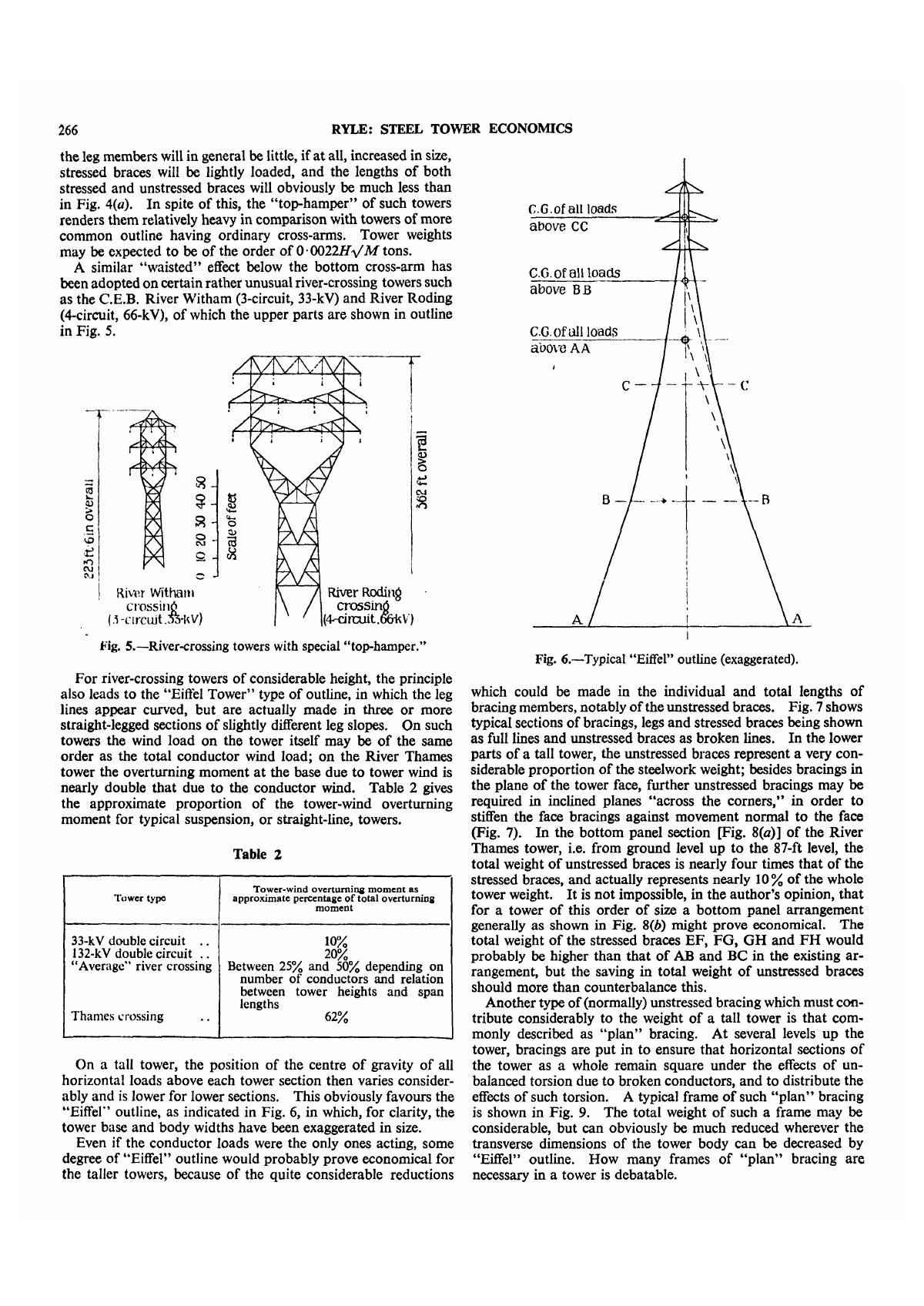
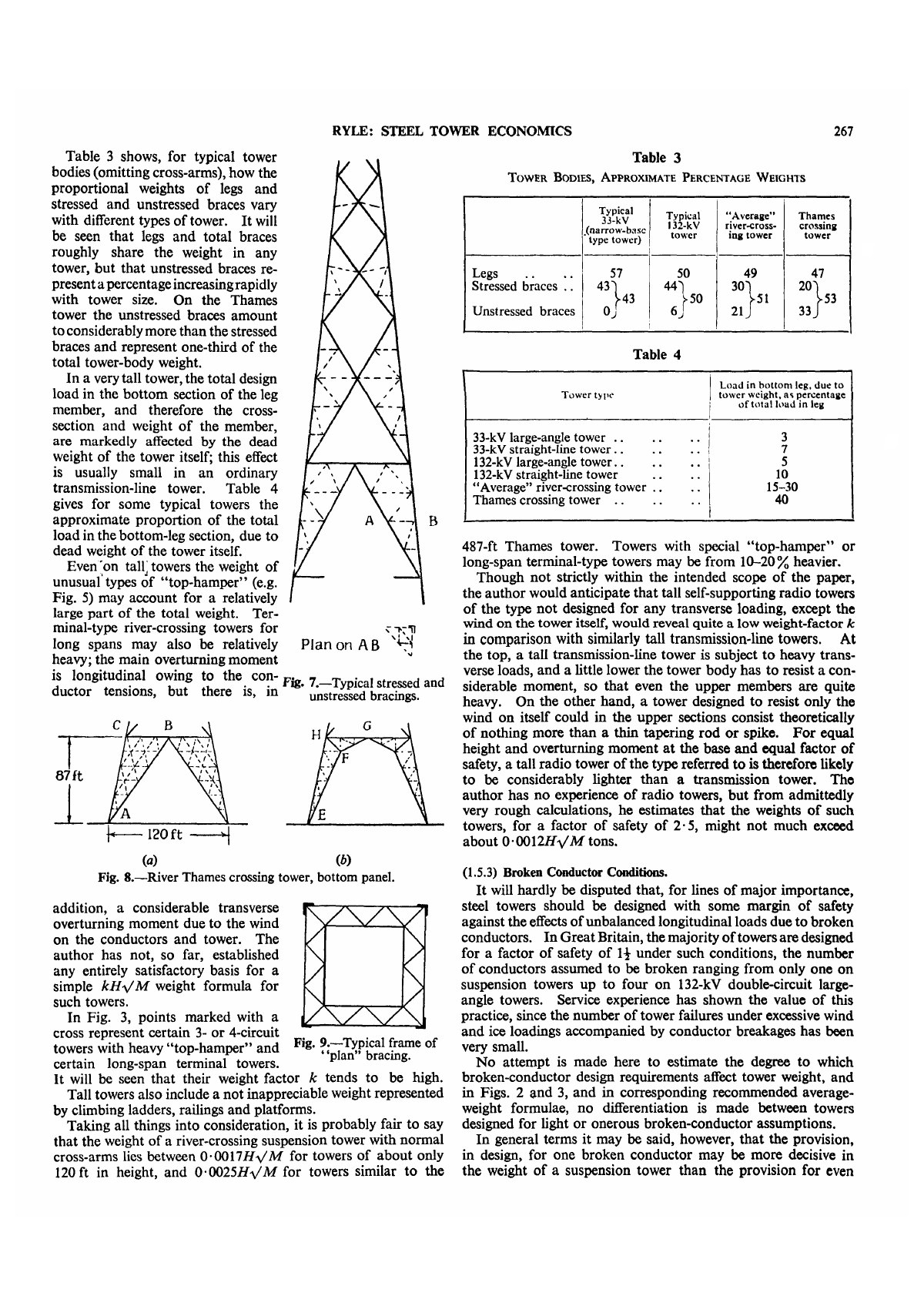
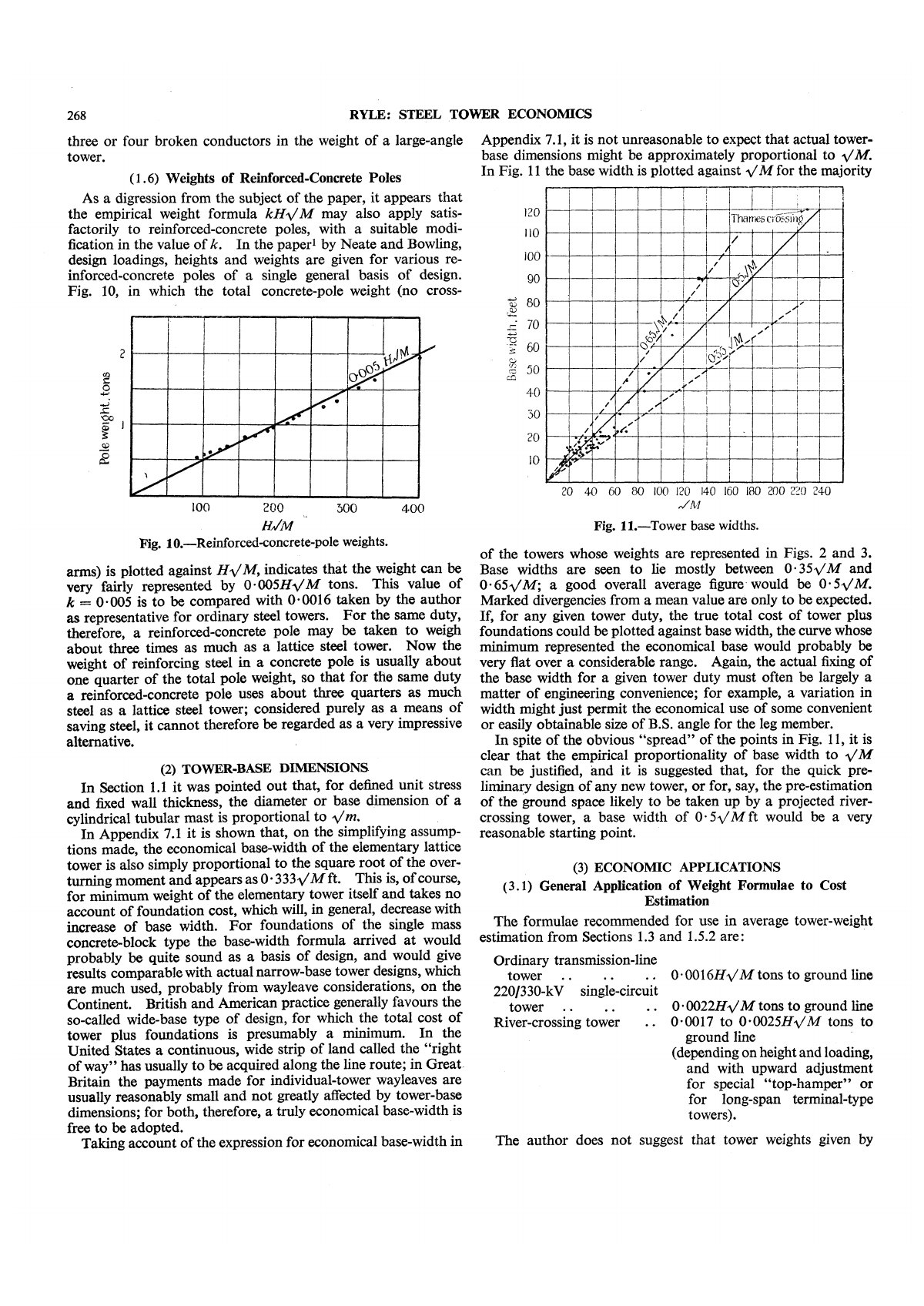
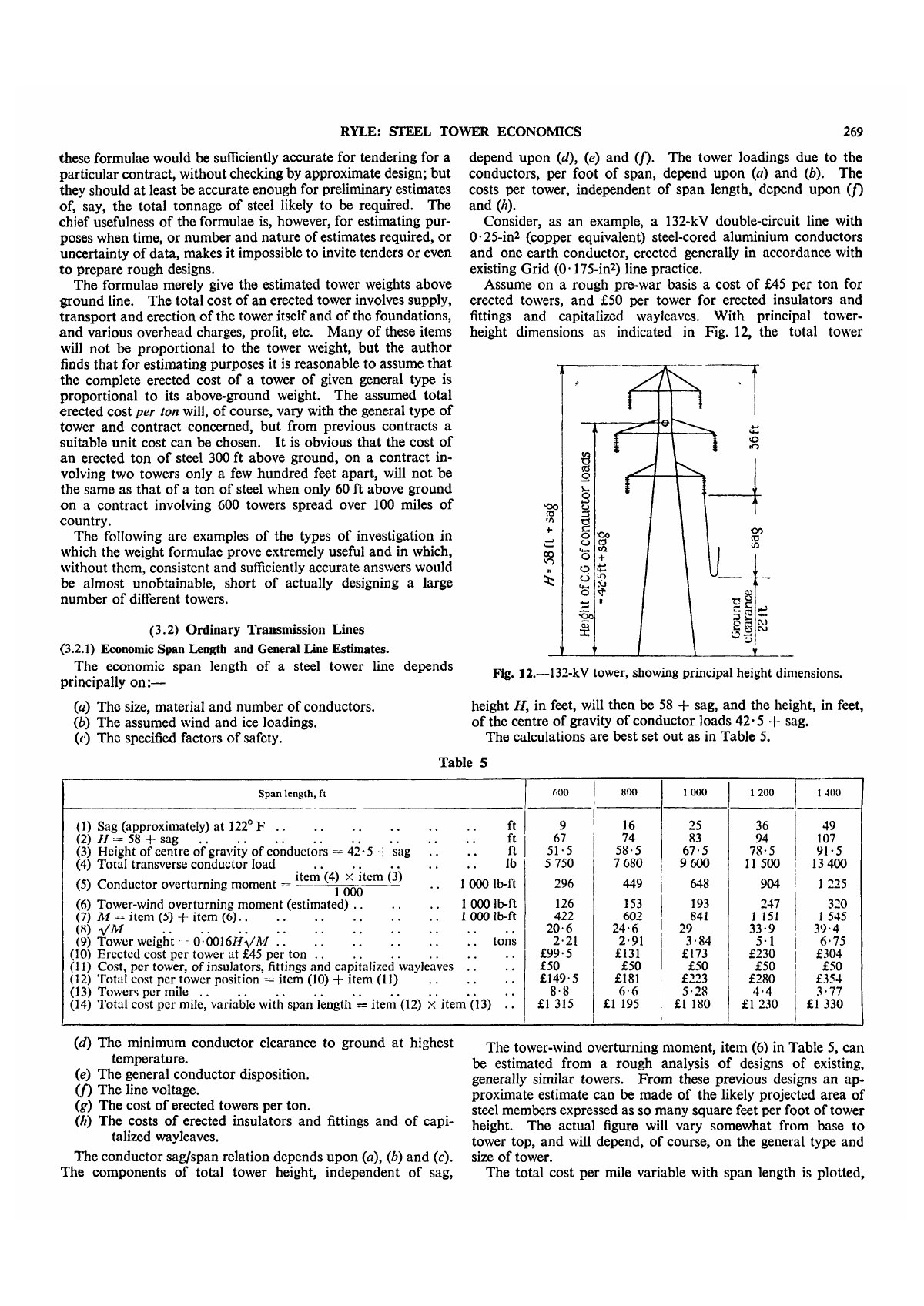
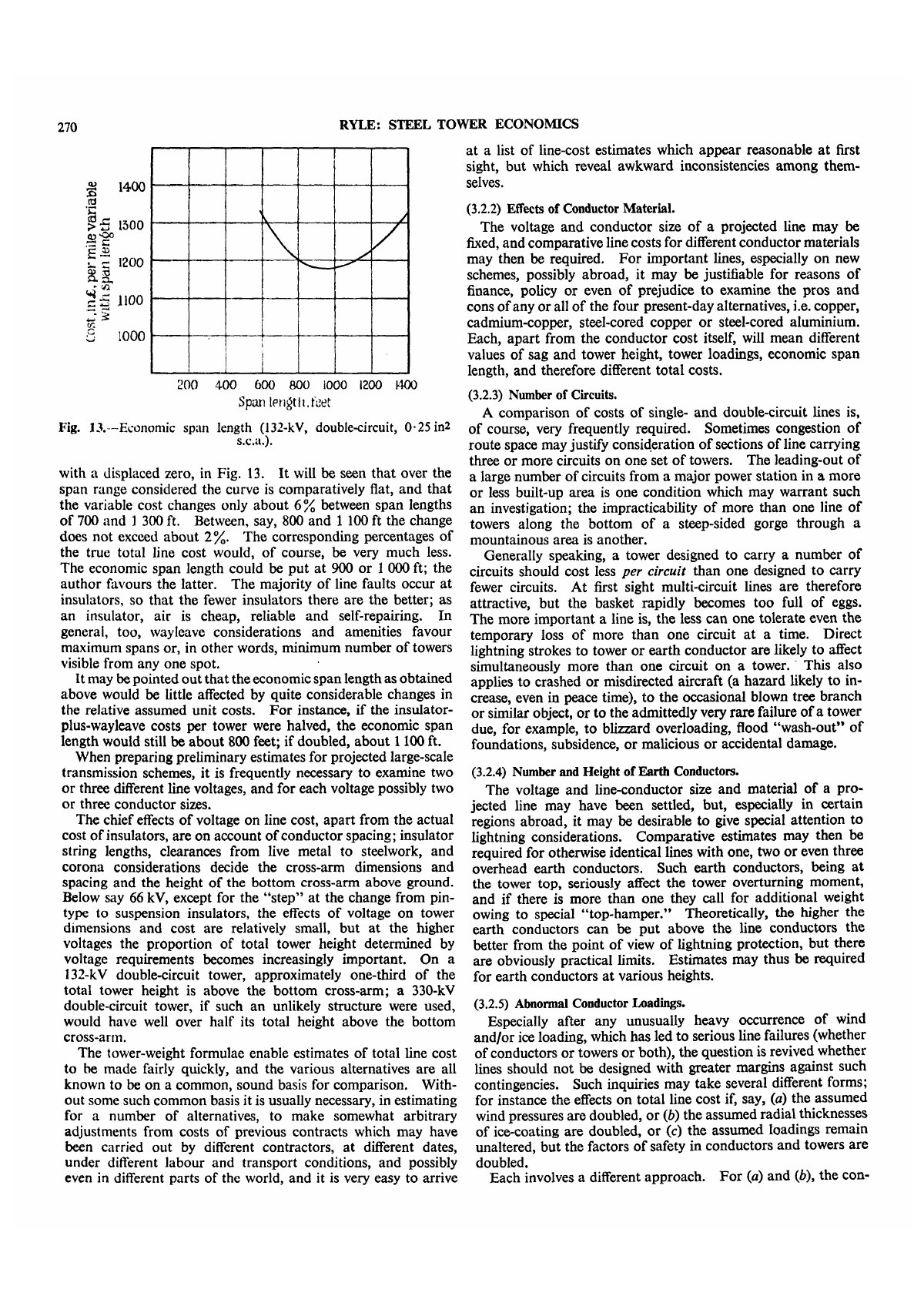
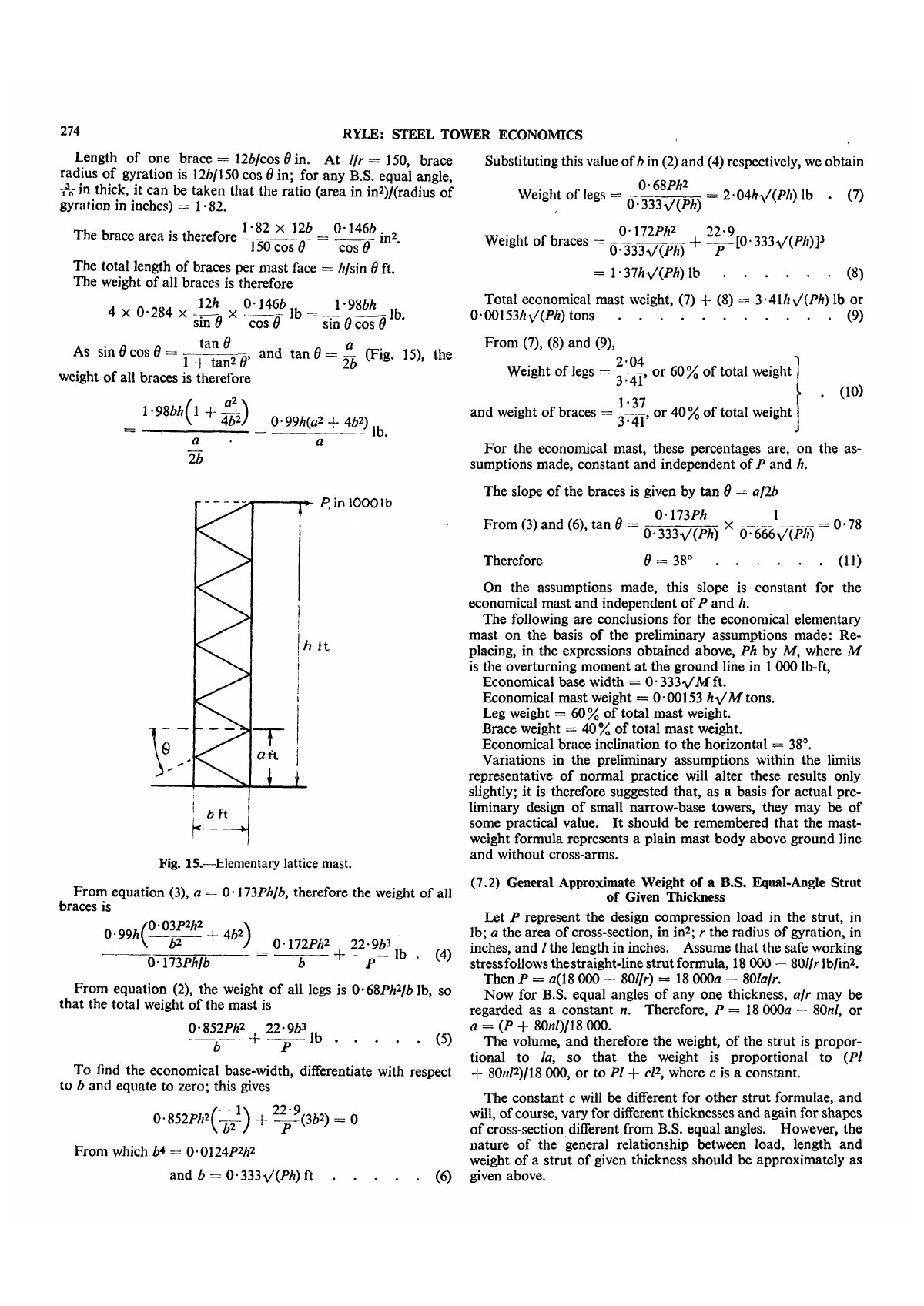
In 1946, an author analysed existing transmission towers across the United States and Great Britain and proposed practical empirical relationships for estimating optimum conductor selection, span length, and tower proportions. Although developed decades ago, the methodology remains remarkably insightful because it focuses on conceptual engineering rather than detailed structural analysis.
Two of the key relationships are:
where:
- K ranges from 4.58 to 6.87, converted to SI units, depending on tower configuration and structural optimization.
- R ranges from 0.0916 to 0.1702 depending on geotechnical conditions and tower configuration.
- H is the tower height.
- M represents the governing overturning moment at the ground level.
These equations are naturally simplified and should not be used for detailed design. Nevertheless, they provide valuable insight into how tower dimensions scale with loading and remain useful during conceptual studies.
A Call for New Research
The engineering industry now has access to vastly more transmission line data than was available in 1946. We also have modern tower families, new materials, advanced manufacturing methods, and improved construction techniques.
This presents an excellent opportunity.
By analysing modern transmission line projects from around the world, we could update these empirical coefficients and develop a practical conceptual design methodology for today's engineers.
Such research would bridge the gap between engineering judgement and computational optimization, providing a rational starting point before detailed design begins.
Steel Tower Economics
P. J. Ryle, Journal of the Institution of Electrical Engineers - Part II: Power Engineering, 1946, pp. 263-274.